
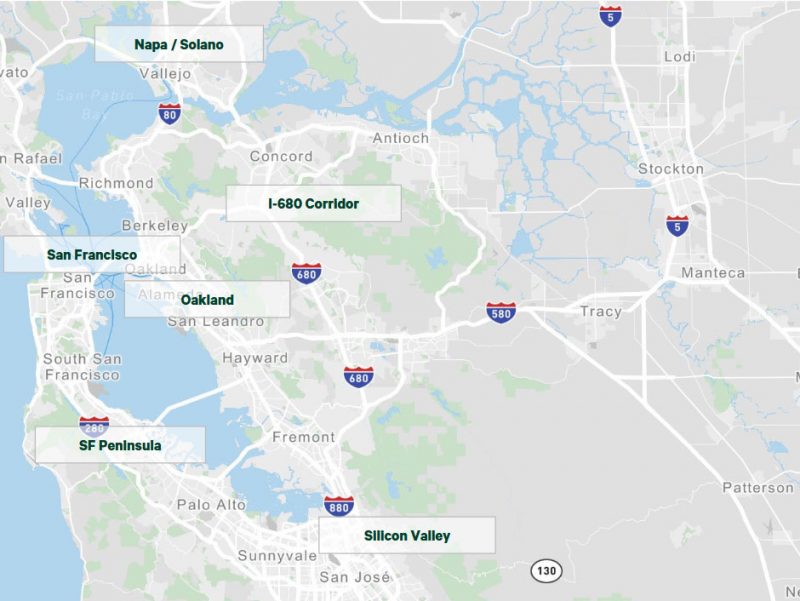
The Bay Area’s industrial real estate sector remained resilient through the close of 2024, signaling key opportunities and challenges as we move into 2025. With a total of 2.4 million square feet under construction and 2.1 million square feet delivered year-to-date, the region continues to respond to tenant demand while navigating economic headwinds.
Market Highlights: Stability Amid Change
The fourth quarter witnessed a balanced performance across the Bay Area’s industrial markets:
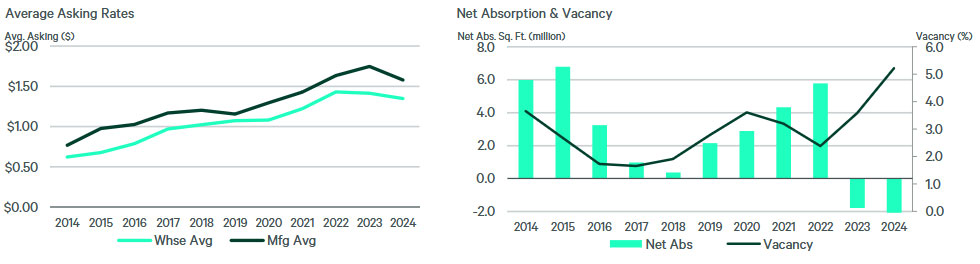
- Average Asking Rents: $1.42 per square foot (Net Net Net), with warehouse rents averaging $1.35 and manufacturing spaces at $1.58.
- Vacancy Rates: The overall vacancy rate stood at 5.2%, reflecting stability despite ongoing economic uncertainty.
- Net Absorption: While Q4 recorded a relatively modest net absorption of 59,000 square feet, the year-to-date figure remained in the red at -5.5 million square feet.
Notable Leasing Activity
High-profile transactions in Q4 indicate continued tenant interest in strategically located spaces:
- Forward Air: Renewed 135,860 square feet in Oakland.
- Biagi: Signed a new lease for 128,000 square feet in Napa/Solano.
- US Auto Force: Leased 116,415 square feet at 2000 Maritime Street, Oakland.
These deals highlight the strong demand for warehouse and logistics hubs in key submarkets like Oakland and the Peninsula.
Investment and Sales Trends
Industrial property sales activity cooled in Q4, with notable transactions including:
- EQT Exeter’s purchase of two Napa/Solano properties for over $200 million combined.
- WPT Capital Advisors’ acquisition of 6000-6025 Giant Road, Oakland, for $132.5 million.
Despite a slowdown in volume compared to earlier in the year, the total sales for 2024 exceeded $800 million, reflecting sustained investor confidence in the Bay Area’s industrial market.
Looking Ahead: Trends and Predictions for 2025
As we step into 2025, the Bay Area industrial market is poised for a dynamic year, shaped by these key factors:
- Tenant Concessions: These are expected to persist as landlords adapt to economic conditions and a high inventory of available space.
- Rising Confidence: With a new administration and a focus on improving business conditions, landlords and tenants are likely to feel more confident in making long-term decisions.
- Absorption Challenges: While new construction continues to bring supply into the market, sustained leasing activity will be crucial to balancing vacancy rates.
Stay tuned to for comprehensive updates and insights as the Bay Area industrial market evolves in 2025.


