
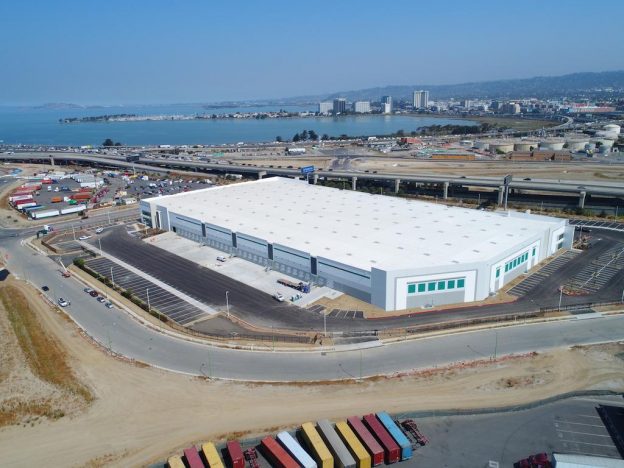
Despite the East Bay’s industrial market continuing to boom, one group of prospective tenants is taking a step back. According to data from real estate services firm CBRE, tenant requirements in the Oakland industrial market sank 36% from the third to final quarter of 2022. The quantity of space being sought by prospective tenants dropped from 9.4 million square feet across 67 companies to just over 6 million across 45 companies.
Bob Ferraro, an Oakland-based executive vice president for CBRE and veteran of the East Bay’s industrial market, said that decline can be attributed, at least in part, to new caution exercised by advanced manufacturing tenants. Manufacturing tenants are often backed by private equity or venture capital – two funding sources made wary by the last few quarters’ worth of economic volatility. Now manufacturers must be more conservative with their capital and some are choosing simply to remain in their existing facilities rather than sign new leases.
“The clients I’m dealing with in the manufacturing sector are constantly battling budgeting. They’re looking at space, then they’re not, they’re looking at space, then they’re not,” he told me. “These companies have money, but they’re not sure if they’ll get more, and they’re budgeting. So they’re constantly playing with what they should plan to spend now.”
The fourth quarter of 2022 saw nearly 400,000 square feet of net new space leased by tenants; logistics providers made up 42% of new leases signed while manufacturers made up another 24%. Vacancy and total availability rates declined to 2.6% and 3.7%, respectively.
Although the requirements pullback has not yet impacted the Oakland industrial market, it could eventually translate into a corresponding pullback on new construction starts for speculative product that would have otherwise delivered in 2024 or 2025. Ferraro said that would be a notable change for the East Bay which experienced unprecedented demand for industrial space beginning in 2020 and has seen large quantities of newly delivered industrial product lease quickly.
The changed dynamic may already be percolating into the industrial market; San Francisco-based Prologis (NYSE: PLD), the largest domestic industrial real estate investment trust said in the fall of this year that despite a strong third quarter it planned to slow development starts through the remainder of 2022 based on the assumption that an economic slowdown was imminent.
At the national level, my colleague Ashley Fahey at The Business Journals reports that the fourth quarter represented the second consecutive quarter that industrial supply outpaced demand for space. Manufacturing tenants appear to be exercising caution nationwide: they gave back the most space of any other kind of industrial user over the past 12 months accounting for 27.4% of newly listed sublease space according to data from real estate services Colliers.


